
Hour Horary Quadrant
- Details
- Hits: 14334
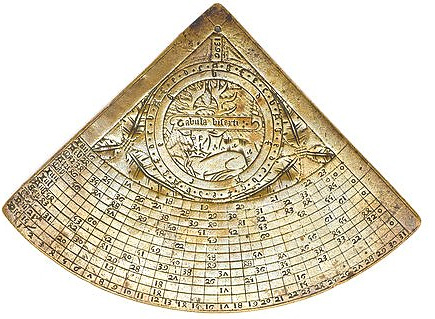 What’s worth more than £150,000? An hour horary quadrant dating to 1396 with the personal seal of Richard II. It is up for auction at Bonham. The quadrant, owned by Christopher Becker in Australia, spent the last twenty years in a bag of pipe fittings. An ancestor of Becker apparently came across the quadrant 150 years ago somewhere in Northern England before its final resting spot in Australia.
This quadrant divides the day into 24 equal hours. With a plumb-line attached to one of its corners, pointing the quadrant towards the sun allows the time to be read at the intersection of the plumb line and one of the engraved scales. On its reverse, the quadrant shows a badge depicting a stag lying down wearing a coronet around its throat, symbols associated with Richard II.
The oldest European astrolabe dated 1326 is credited to being used by Chaucer (1342-1400) and resides in the British Museum.
Washington's Sundial in the Spotlight
- Details
- Hits: 21242
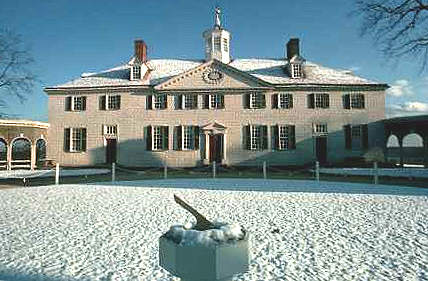 George Washington's Sundial is in the Spotlight: Sometime during 1765-1781 Washington placed a 12 inch brass horizontal sundial at the heart of his Mount Vernon plantation. The sundial sits atop a white painted octagon wood pedestal in the center of the front lawn of his mansion. It stands as a visual reminder of the importance of time to all who passed it. A replica of the original dial now reminds tourists of the time, but the original is in the museum. Go to http://www.georgewashingtonwired.org/ and read more about Mount Vernon and visit NASS_Registry_Dial167 where you can find details of Washington’s dial.
Oldest Sundial in the Western Hemisphere
- Details
- Hits: 11444
 Where would you look for the oldest dials in the Western Hemisphere? One is attributed to the Pilgrims in Salem in 1620. Earlier slate dials were used by Newfoundland fisherman. But La Fortaleza, in San Juan, the oldest Executive Mansion in the New World may lay claim to the oldest sundial.
 Sundials in the Antilles.pdf Sundials in the Antilles.pdf | [ ] | 291 kB |
Sundial Rededication
- Details
- Hits: 13119
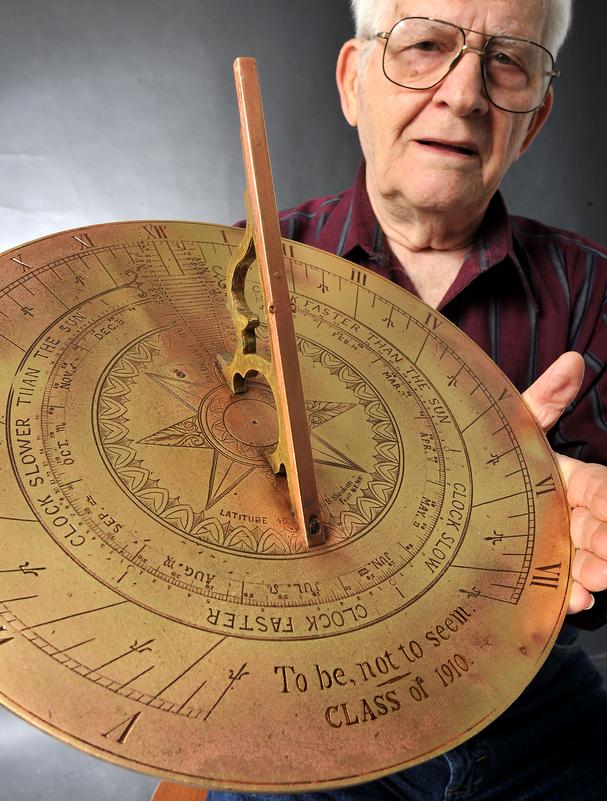 A sundial that was originally purchased by the 1910 class of Springfield (Ohio) High School and which adorned the original high school grounds for decades was recently refurbished and rededicated at the new Springfield High School.
Even though the dial adorned the school grounds for much of the 20th century, it eventually found its way into storage, where it remained until it was recently uncovered.
Rare Sundial Sold
- Details
- Hits: 12570
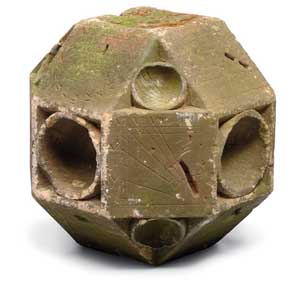
[photo credit: Christie's ]
|
A rare stone, polyhedral sundial discovered in England, and thought to date from the Scottish renaissance, sold April 7, 2011 for £16,250 (\(26,500) at Christie's South Kensington, London.
The sundial discovered in 1974, and thought to date from the Scottish renaissance, went on the auction block this April as part of Christie's Travel, Science and Natural History sale in London. The dial is made of stone and technically described as a polyhedral dial, with several independent sundials arranged on different facets of the stone. Pre-auction estimates placed a value somewhere between £7000 and £10,000 (\)11,400 and $16,300) but sold for nearly three times the initial estimate.
Getty Research Institute on the Solstice
- Details
- Hits: 4926
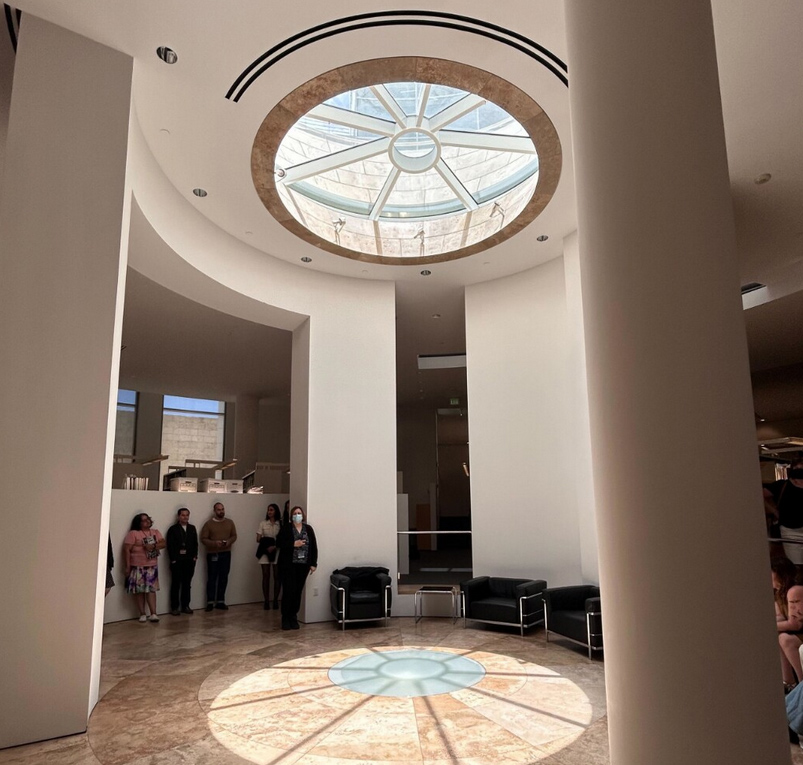 Off Interstate 405 in the hills of Los Angeles is the Getty Research Institute, part of the campus of The Getty Center. The Center houses the free Getty Museum, the Getty Library, Getty Research Institute, Getty Foundation, and Getty Conservation Institute. The Getty Research Institute opened its doors to the public in December of 1997, where besides the thousands of books, art collections, and photos, architect Richard Meier designed a wonderful solar alignment. In the center of the circular building is large, round, glass-framed oculus that acts as a skylight for the library gallery floor beneath. But the oculus skylight is not centered on the vertical. Instead, the glass framework is angled to accommodate the institute's latitude of 34.077° North. Some simple map shows that the oculus framework needed be angled 10.637° south from the vertical. At this angle at local solar noon on the day of the solstice, the oculus casts a circular shadow centered on the library's marble floor beneath. Photo from Getty Research Institute, Creative Commons.
Read more at: https://www.getty.edu/news/summer-solstice-at-the-research-library/
Preparing for the Solar Eclipse of April 8th 2024
- Details
- Hits: 7358
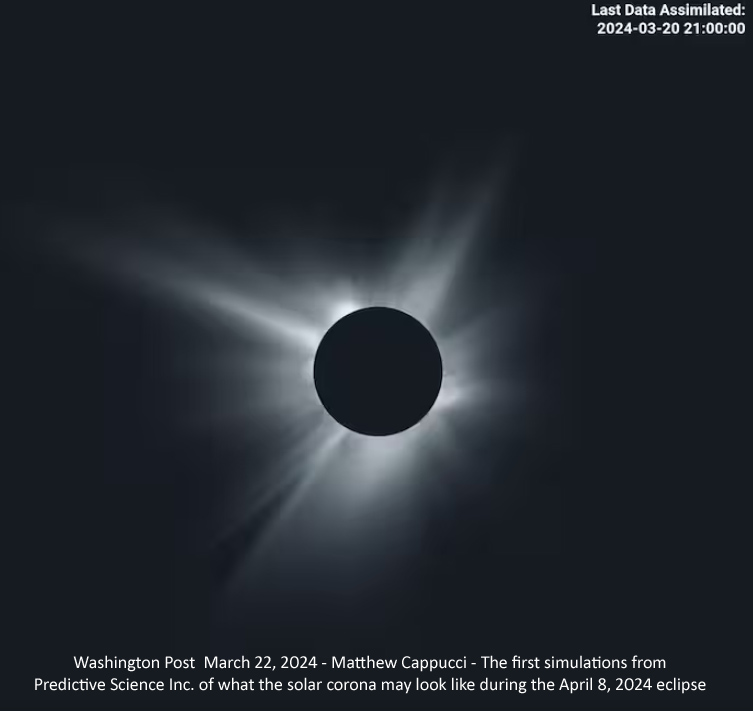 There are lots of maps showing where to go for the April 8th 2024 total solar eclipse and others showing the statistical chance of clouds such as https://www.washingtonpost.com/weather/2024/02/22/april-eclipse-clouds/ From Little Rock Arkansas to the Mazatlan coast there is a high probability of clear weather. The cities from Indianapolis through Cleveland OH, Rochester and Syracuse NY and Burlington VT have a good chance of cloud cover. Fortunately such websites as Time and Date https://www.timeanddate.com/live/eclipse-solar-2024-april-8 will live-stream the eclipse with totality beginning 12:38pm EDT and on YouTube Through the Eyes of NASA - Official Broadcast at https://www.youtube.com/watch?v=2MJY_ptQW1o
But what will you see during totality when you can take off your solar protective glasses? Predictive Sciences Inc, funded by NASA and the National Science Foundation (NSF) have created a " Data-Assimilative, Continuously Running Prediction Model Updated in Near Real Time" showing what the solar corona may look like during totality. The prediction is based on the current state of sunspots, solar flares, corona mass ejections, and the sun's magnetic field.See it at: https://www.predsci.com/corona/apr2024eclipse/home.php
The corona is expected to be much more active and extensive than the total eclipse that crossed the United States in August 2017 as the sun isnow approaching sunspot maximum
Today - Chicagohenge
- Details
- Hits: 9493
The date is Sep. 22, 2022, the date of the fall equinox. Although this is supposed to be the day of equal day and night, we know it's not exactly correct. We measure daytime from sunrise to sunset, measured as the first and last light from the sun peaking over the horizon. When we include sunrise and sunset plus atmospheric refration, at mid latitudes daylight wins by about 10 minutes (not even counting twilight).
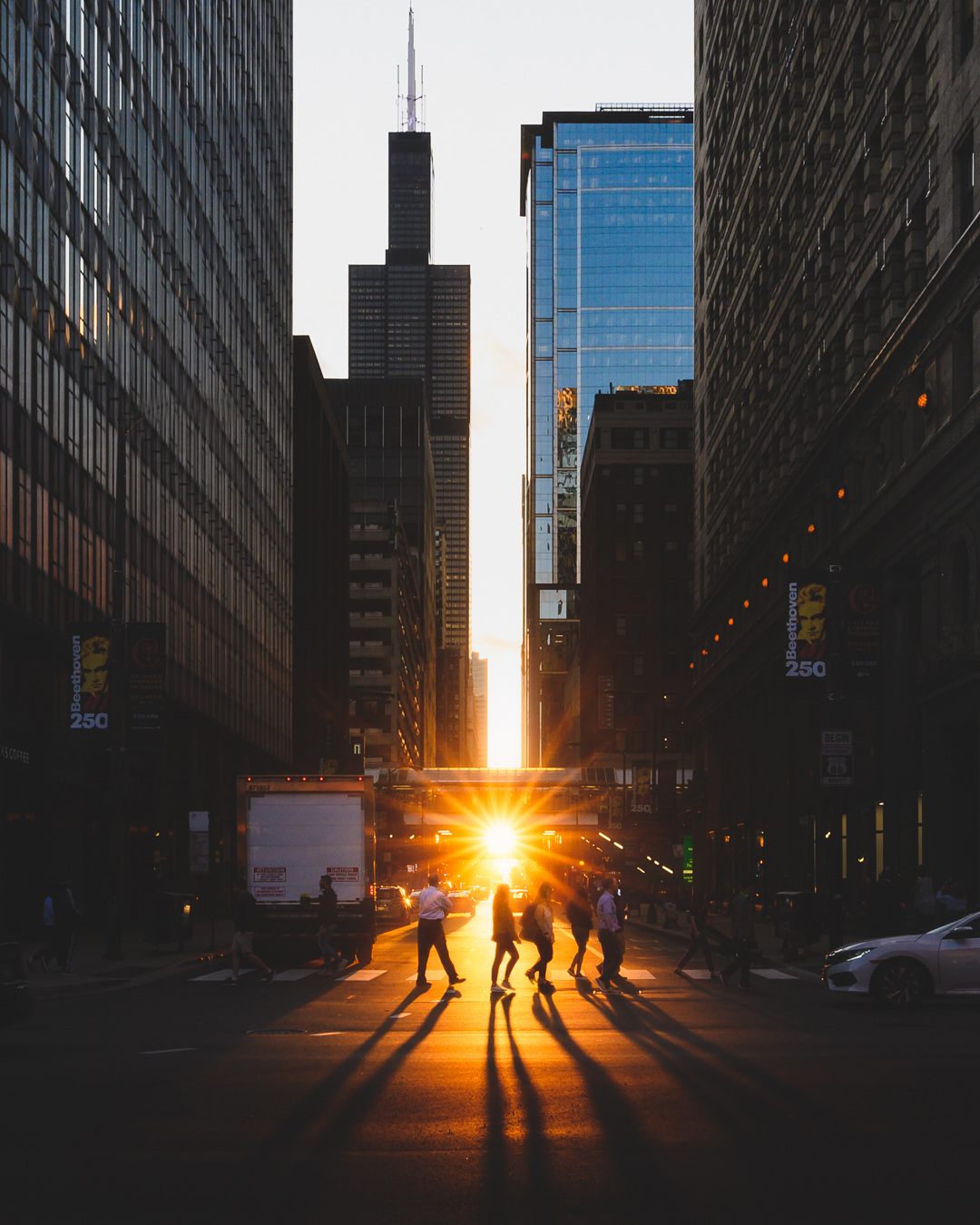 Chicagohenge photo by Tim Hara
|
But something magical happens as the sun sets due west on the equinox in Chicago. The sunset direction matches the direction of the Chicago grid of East-West streets. The effect is known as Chicagohenge.
From the Adler Planetarium website (https://www.adlerplanetarium.org/blog/chicagohenge/): "Chicagohenge occurs twice a year and happens when the Sun directly lines up with Chicago’s east-west facing streets ... To fully understand Chicagohenge, you have to be aware of the two main factors that cause it: Chicago’s grid plan and equinoxes...The present-day Chicago grid system can be attributed to the Public Land Survey System -- a surveying method created in 1785 that was used to divide land for selling and settling. But this style of city design has been around since the dawn of civilization and can be found in the ruins of ancient Rome, Greece, and others [sometimes creating solar alignments in these cities such as Manhattan Henge] ... Fun fact: Chicago’s streets line up almost perfectly with the cardinal east and west directions on a compass. This in turn, sets up the perfect stage for Chicagohenge to take place."
The Planetarium Blog continues. "Since the Earth’s axis is tilted, sunlight is not always distributed equally. At any given point, one-half of the Earth is tilted towards the Sun more than the other. As the Earth orbits around the Sun, the part that was tilting away from the Sun begins to be the part that is facing towards the Sun. This is why we have seasons! ... There are two equinoxes each year, one that marks the start of spring (Spring Equinox) and one that marks the end of summer (Autumn Equinox). Thanks to Chicago’s perfectly lined grid system, the bi-annual equinoxes mark a time when the Sun rises and sets directly in line with Chicago’s east and west streets, causing Chicagohenge! ... Finding a place to spot Chicagohenge is a no-brainer! Simply find one of Chicago’s east-west facing streets, plop a seat, and enjoy the view."
Eclipse of Sun by Phobos Seen by Perseverance Rover
- Details
- Hits: 7885
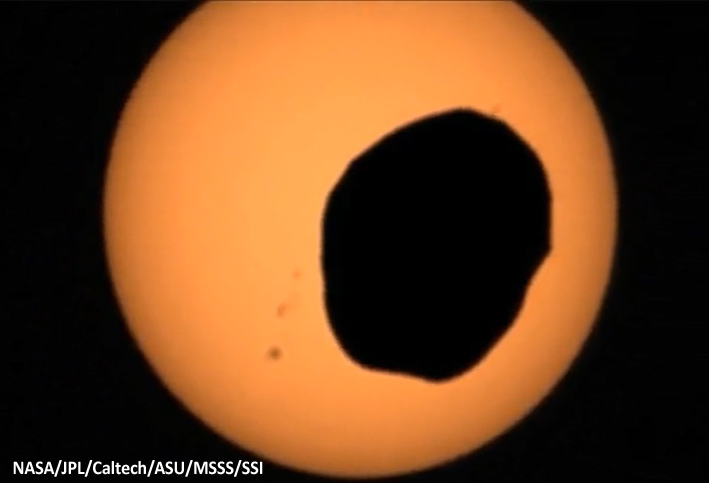 On April 2, 2022 the Perseverance Martian rover's Mastcam-Z camera looked sunward and took a video of the eclipse of the sun by the "potato-shaped" moon Phobos.
According the NASA Mars Exploration Program site, "It’s the most zoomed-in, highest-frame-rate observation of a Phobos solar eclipse ever taken from the Martian surface." NASA reports that "Several Mars rovers have observed Phobos crossing in front of the Sun over the past 18 years. Spirit and Opportunity made the first observations in 2004; Curiosity in 2019 was the first to record video of the event. Each time these eclipses are observed, they allow scientists to measure subtle shifts in Phobos’ orbit over time. The moon’s tidal forces pull on the deep interior crust and mantle of the Red Planet; studying how much Phobos shifts over time reveals something about how resistant the crust and mantle are, and thus what kinds of materials they’re made of."
Watch the video: https://mars.nasa.gov/news/9172/nasas-perseverance-rover-captures-video-of-solar-eclipse-on-mars/